03/03/2026
This article provides engineering details of the Low-income communities (LIC) Demonstrator within the SOLMATE framework. The main objective of this demonstrator is to design, build, and validate a decentralised renewable energy system that couples reused PV panels and second-life EV batteries to provide affordable, reliable, and safe power for low-income communities.
The LIC demonstrator initially featured a 90 kWh/45kWp battery energy storage system (BESS). Watt4Ever, in charge of this demo, recently updated this setup to include an advanced energy storage solution that allows easy integration and flexible configurations with various applications, from batteries, grid services and energy arbitrage.
The PowerCab 90, which is a lower-capacity version of the PowerCab100, has been developed by Watt4Ever to meet the environmental, technical, and economic constraints typical for low-income contexts. The proposed design, which is modular and fully plug-and-play, allows long-term data logging and performance tracking, both necessary during the upcoming demonstrator validation activities. But the main focuses of this final engineering is to reduce costs, propose solutions that are easy to install and do not require extensive maintenance, by using locally available resources and supply chains.
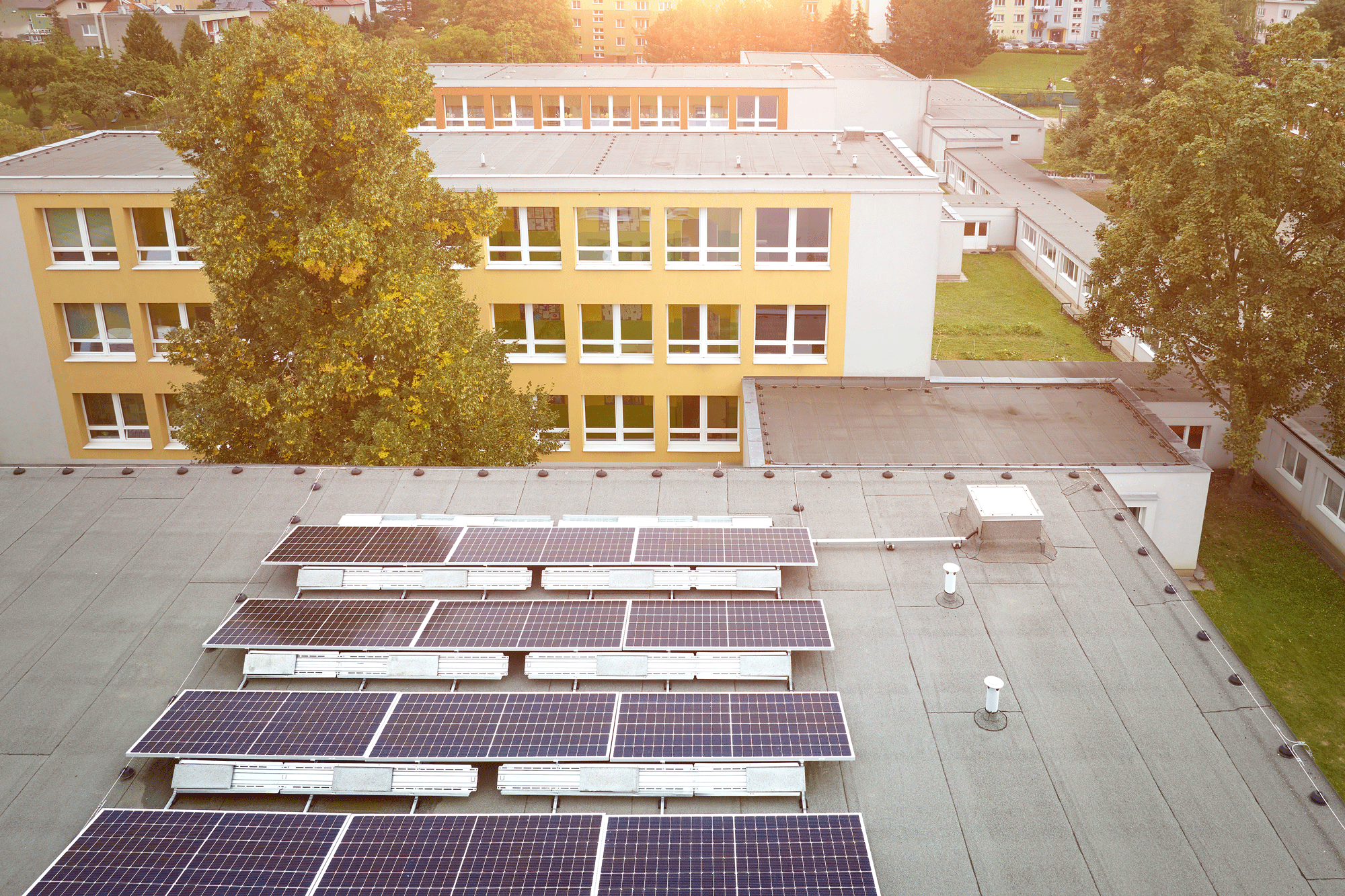
The plan is to install the demonstrator on the premises of a school in a low-income community setting in the Brussels-Capital Region, serving as a representative case for vulnerable communities. The engineering design integrates about 45 kWp of reused PV panels supplied by project partners and the PowerCab90 system. The aim is to support partial self-consumption, energy cost reduction, and educational visibility as a replicable model for similar communities in Europe and emerging markets.
The main remaining challenges relate to administrative approvals at the institution’s site, particularly the grid connection study which needs approval from the local energy distributor and the environmental and insurance authorisations for the BESS location. Partners have started addressing proactively these aspects, and early engagement with the relevant authorities and insurers will be essential to maintain the planned timeline.
© visual Adobe Stock | Martin Mecnarowski