04/03/2026
Building on the previous progress of AgriPV demonstration operations, this stage moves from technical specification to detailed engineering of the demonstrator. Difficulties securing the environmental permit for new vertical rows at Transfarm and delays in sourcing suitable second-life PV modules, prevent us from presenting the detailed engineering drawings of the AgriPV setup at this stage.
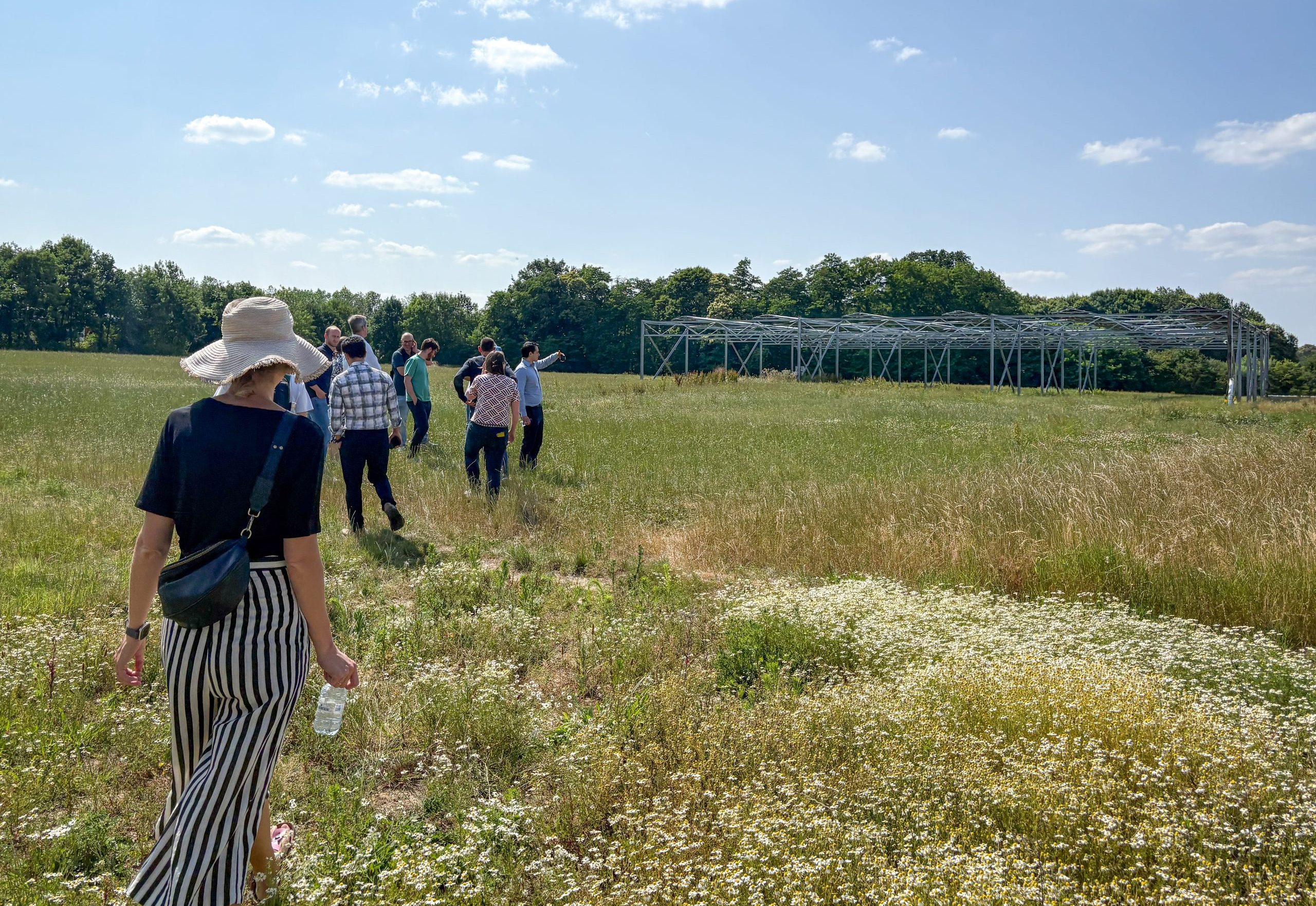
SOLMATE agrivoltaics (APV) demonstrator is built to test how second-life PV modules and batteries perform in an agricultural setting. It combines three elements that aim to provide evidence for performance, reliability and cost effectiveness under farm-relevant conditions:
- a vertical bifacial APV system that compares new and second-life modules
- an elevated APV row in which new modules are replaced by second-life modules for like-for-like comparison
- a stationary Battery Energy Storage System (BESS) assembled from second-life lithium titanium oxide (LTO) battery packs
The environmental permit to build the agrivoltaics demonstrator at Transfarm was originally rejected. Following consultations with the municipality, particularly the department responsible for cultural heritage, which had initially rejected the proposal, verbal approval has been granted for the construction of the demonstrator. This approval was given in light of the research character of the Transfarm site and the agrivoltaics installation. As of February 2025, preparations are underway to resubmit the formal application for the environmental permit. The AgriPV demonstrator is expected to be built in Q3 2026 and fully operational by Q4 2026.
The business case was reframed not only to reflect the perspective of Transfarm as a research facility but also the perspective of companies that install commercial systems. These developments outline now two critical questions: one referring to permitting pathways for APV, while the other questions availability of second-life components suitable for reuse.
The economics show uncertainty in the context where reused components only make sense if their total cost (which includes dismantling, transport, testing) remains below that of new equipment. Economic feasibility is based on the Levelized Cost of Electricity (LCOE), rather than €/Wp alone, as second-life modules produce less energy over their lifetime.
While reusing batteries and solar panels has undeniable environmental benefits, important questions are still looming. To generate the same energy output, a second-life installation would require a large area. Environmentally, reuse extends component life, but the lower kWh/kWp performance compared to high-efficiency new modules needs to be taken into account in the environmental assessment.